Showing posts with label Lightweight Backpacks. Show all posts

Wednesday, May 20, 2015

Outdoor Products 30L Shasta Weather Defense Backpack


The kind folks at Outdoor Products recently reached out to me to review their 30L Shasta Weather Defense Backpack ($72/ 2 lbs 3 oz (much lighter if the waist belt and back panel are removed)).  My initial reaction was that a backpack of this type, and one not commonly associated with the lightweight backpacking cottage community, was likely not in my own interests or that of my readers.  However, the more I thought about it, and reflecting on the tangible stagnation within the lightweight community over the last few years, I decided to put my biases aside and give it a shot to see where it may fit in to my gear closet.

Outdoor Products is best known to me as a Walmart staple in their sporting goods section.  Like Coleman goods, Outdoor Products is widely accepted as a brand for the budget-conscious outdoor sports participant.  They offer a fairly broad range of products including backpacks, hydration sleeves, waist packs, luggage, duffle bags, outdoor kitchen gear (bowls, plates, utensils), trekking poles, carabineers, tarps, containers, etc.


In the nearly 15-years I’ve been associated with lightweight and ultralight backpacking, I can honestly say that it has drawn more of my paycheck than I ever could have imagined.  The reason is because I spent wildly on expensive gear long before I had sufficiently developed my preferences and skills.  The mailman and I were on a first name basis for many of those years and my wife will (un)happily recall many conversations where I defensively articulated that I had returned a box that had just appeared on our doorstep as not to worry her about my growing obsession.  Of course, she was smart enough to ask whether return shipping or a restocking fee was included and that’s when I knew I’d be busy during the weekends ahead with my growing honey-do list.
 
With this in mind, I try my best to give thoughtful responses when asked about what gear to purchase by those thinking about getting into lightweight backpacking.  The answer is usually fairly straight-forward for novices – go to Walmart.  Purchases of top-end expensive tarps, sleeping bags, backpacks, and stoves can be a significant investment, one that shouldn’t be taken lightly and may not even be necessary for the casual weekend warrior.  The dirty little secret in the lightweight backpacking community isn’t always the gear; it’s the knowledge to fully appreciate what is truly necessary, to be a thoughtful planner, and to exercise reasonable discretion.   It is with this in mind that I consider Outdoor Products . 

The Shasta Weather Defense Backpack is largely marketed as a day pack.  Made of 420 denier fabric with TPU coating, the pack is advertised as “water-resistant” and not “water-proof”.  It has a roll-top closure with haul loop, welded seams, articulated padded shoulder straps with sternum strap, a large front pocket and even a trekking pole holder.  The padded back panel is fastened by Velcro and the waist strap can be removed.  Dimensionally, the pack is 20.5”x 10”x 10” which is identified as 1,654 cu/in.  And for those insisting on making a fashion statement in the great outdoors, it comes in risqué red or sophisticated black – with reflective accents.
 
At 1,654 cu/in, the Shasta Weather Defense Backpack is very close to the 1,700 cu/in size of my Gossamer Gear Murmur which is nearly double the price and doesn’t quite the water-resistance.  Arguably, the Shasta Weather Defense Backpack  is far more durable and offers better protection in the rain too.  For those of you thinking this may be too small of a backpack to carry as anything other than a day pack, I’d personally disagree having used a pack of this size exclusively during summer months on many outings.  At 6’5”, most of my gear is larger than the average person, so take this to mean that this little pack is big enough even for big boy stuff – if you pack only what you need and you’re conscious of size restrictions.
 
In the interests of transparency, I’ve got a wall full of backpacks.  So why should I (you) care?  Well, aside from being an excellent option for someone looking for an affordable pack, the Shasta Weather Defense Backpack offers far greater weather-protection and durability than other more expensive light(er) weight backpacks.  This versatility allows me to be less concerned about keeping the contents dry and also makes it my go-to pack for any activities associated with water.  My sons and I spend a lot of time in our trusty canoe and having the Shasta Weather Defense Backpack as a resource gives me great peace of mind.  While engrained in me over the years to take care of my gear, I also like the fact that I can head off trail with the Shasta Weather Defense Backpack as I don’t need to be overly concerned with every twig in the forest.

The roll-top closure is perfect for those of us who understand the value of being able to adjust the length of the “throat” of the main compartment as needed.  Simply put, it’s the best no-frills design and what I’d design personally if I were to make my own pack.  The external pocket comes with a waterproof zipper and the pocket itself is larger than most top pockets and is easier to access.

Other than use the pack while backpacking and canoeing, I felt the Shasta Weather Defense Backpack shined in two other situations.  First I’ve been long trying to find comfort in a hammock.  It’s a love-hate relationship because I really enjoy everything about it, but I just have trouble falling asleep.  For those of you who use hammocks, you’ll know that you need to make a decision on what to do with your pack.  Do you lay it on the ground for it to get dirty and possibly infested with bugs or animals?  Do you hang it from a tree and allow it to be exposed to the weather.  To you bring it into your sleeping area and allow it to take over your personal space?  Do you hang it from your suspension, ridge line or bear bag and hope for the best?  For me, I’ve always hung mine on a tree.  Well, because the Shasta Weather Defense Backpack has a roll-top and deals well with weather conditions, I don’t need to worry either about the weather impacting it or the abrasion from the tree.  Secondly, I’ve been experimenting with various Bushcraft techniques for the last 3 years or so.  For those of you who walk in that world, you likely carry a legit knife, saw and maybe even an axe (*gasp lightweight backpackers*), and if you hunt or trap, you likely have various metal objects that wouldn’t hold up well in a pack lacking robust construction.  As the Shasta Weather Defense Backpack is built for durability, it has held up well for these exercises too.

While most of this review seems pretty standard, I somewhat unexpectedly identified an additional value of this pack.  Because the back panel and waist belt are removable, it allows the pack to sufficiently fit anyone in my family.  To be fair, I need to remove the waist belt from most non-custom packs anyway as it’s rare for an off-the-shelf design to allow for a 24” spine length.  What I didn’t expect was being able to cinch/adjust all the bells and whistles to make it a pack appropriate for my sons and my 5’6” wife.   Not wanting to spend the money on packs for family members who are either growing or don’t head to the words frequently enough to justify their own personal pack, the Shasta Weather Defense Backpack is a great option.  I can think of few things in life which can fit a 6’5” man, a 7-year old boy, and everyone in between.  As a father of two growing kids who will be educated on all things outdoors whether they want to or not, having the flexibility of this piece of gear in my gear closet is remarkable.  For those of you with children, I enjoyed watching my son’s face light up when he realized he’d be wearing my pack and that it fit him too despite our obvious size difference.
 
So is the Shasta Weather Defense Backpack the perfect backpack?  No.  With that said though, I’ve probably used or tried over 20 backpacks in the last decade and I’d argue that none are perfect.  Most things in our society are designed for the average person.  Unless the average person is built like an offensive lineman, I’m not the average person.  As such, my areas of concern likely may not be shared.

First, the shoulder strap buckle hit me just above my armpit.  This is because the shoulder straps are not long enough, at least for someone my side.  This created a degree of discomfort in that area over longer hauls, but oddly enough it’s something my body is somewhat familiar with because this is a very common theme for me with most backpacks.  If the straps were made any longer, however, they’d lose some of the fit versatility.

Second, since I remove the waist belt for the pack to fit me, the fabric puckers at the lower part of the shoulder straps which connect to the pack and rubs on my sides and back.  While this settled down the more I used the pack, I view this as a design issue which can be remedied by relocating the termination point of the shoulder straps.
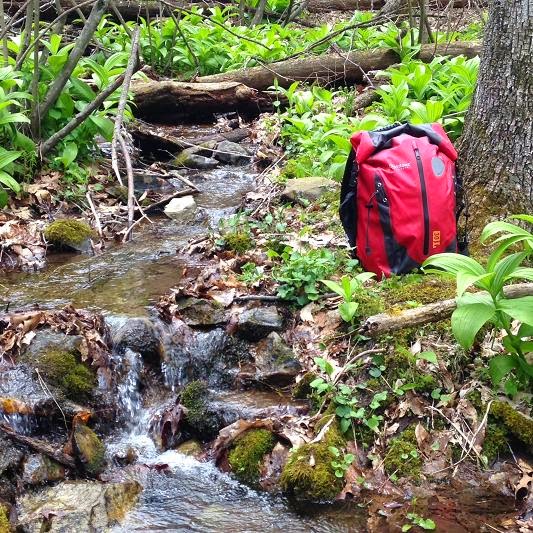
Bottom line, I felt the Shasta Weather Defense Backpack was affordable, durable, exceptionally versatile and great for family fun.  Course I’d be remised if I didn’t recommend the manufacturer offer green as a color option.  As the “Jolly GREEN Giant”, this isn’t the first time I’ve made this suggestion and it won’t be the last.  Blending into the woods is GOOD!  I’ve also heard that red attracts bears, so it’s a color I generally avoid on the outside of my pack or clothing.  Course, red is a great dual-use signal color too.  Either way, give the Shasta Weather Defense Backpack a look.

(Disclaimer:  This product was provided to me by the manufacturer free-of-charge for the purposes of this review; however the information contained herein is offered without bias.)

Wednesday, August 29, 2012

Wednesday, August 8, 2012

REVIEW: 2012 Gossamer Gear Mariposa

Grant Sible, President of Gossamer Gear, was kind enough to let me test the 2012 Mariposa.  Although there was no request for a product review, I felt it was the least I could do. 


Under the watchful eye of lightweight backpacking guru Glen VanPeski, Gossamer Gear set the bar for lightweight and innovative products years ago when lightweight backpacking was in its infancy.  Grant took the reins of Gossamer Gear in recent years and continued to exceed customer expectations while offering exceptional quality cutting edge products.  Gossamer Gear’s redesign of their famed Mariposa was done in the spirit of offering a more durable and smartly designed comfortable-to-carry pack with little compromise to weight.


I had been pestering Grant for over two years to build a pack for taller folks.  We went back and forth over time until one day he asked me which of all of Gossamer Gear’s packs would I like to see in a tall version.  After some thought, I decided on the Mariposa, spelled out what options I liked, and even suggested making the switch to Dyneema Gridstop.  I assumed he was merely gauging product interest and I was quite surprised when I learned it had become a reality, at least in a beta version sent to me.


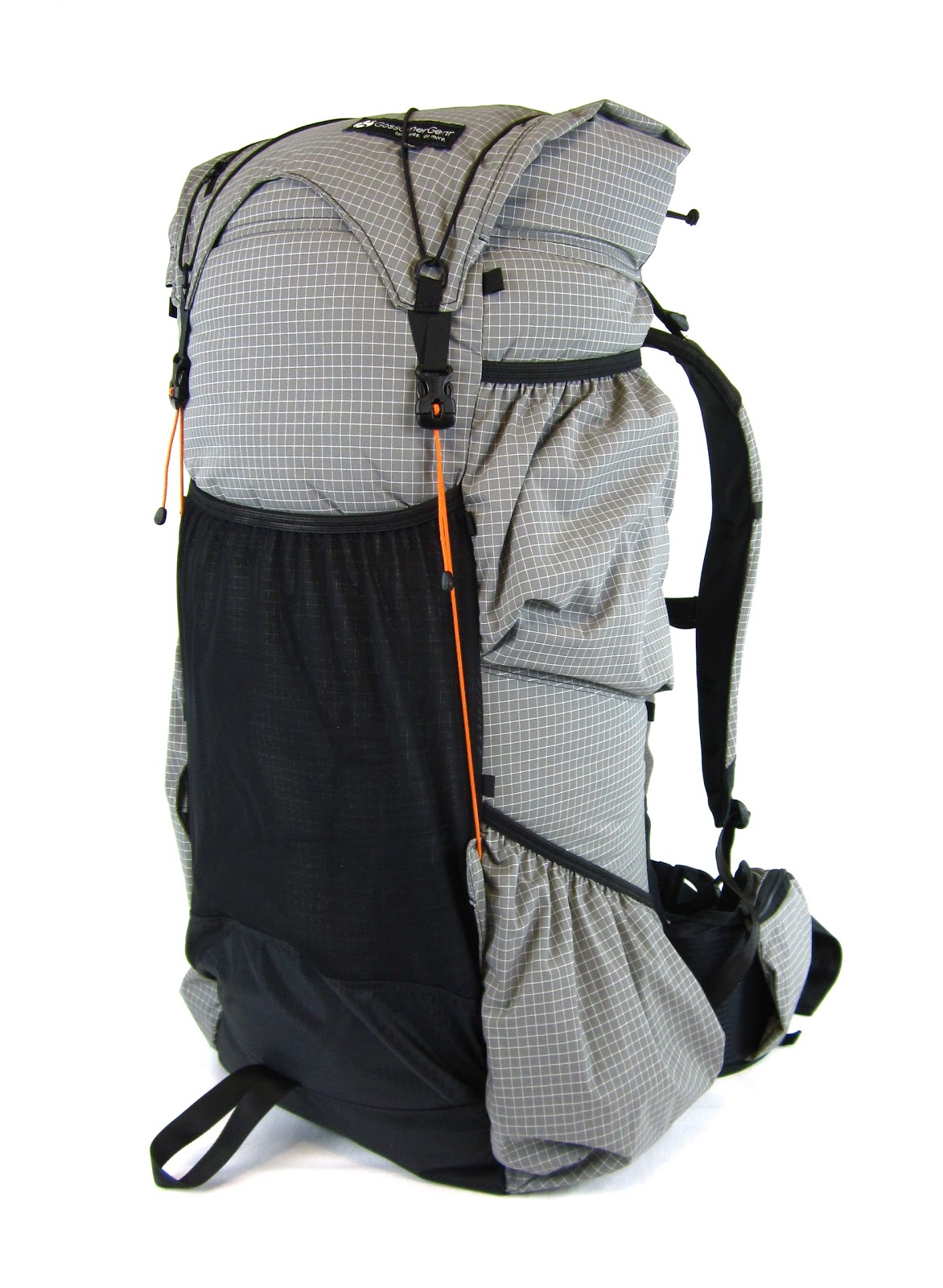
The first thing that grabbed me was the appearance.  The Mariposa is made of a 140 denier Dyneema Gridstop which is a lighter version of that which is commonly used by Mountain Laurel Designs, Six Moon Designs and others.  This takes what was already an incredibly durable and visually appealing fabric and makes it lighter.  It is a very attractive pack which comes with a removable waist belt and integrated pockets.  Even the pockets are made of Dyneema Gridstop which is my preference as they are more durable than mesh and may arguably even be lighter.  The style and location of the pockets on the 2012 Mariposa are the same as previous versions to include two favorites of mine which are a long side pocket suitable for a two-liter bottle, fishing gear, or a sizeable storage area for a tent, and a shoulder pocket which is where I prefer to store my stove/cup combo.  The large mesh back pocket is also great and my preferred location to store my shelter, rain gear and anything I may want to access during the day.  It also has a removable internal aluminum stay which aids with weight transfer to the hips vastly improving carry comfort.  It comes with adjustable shoulder straps, which is a first, and is plenty sizeable at 2860 cu/in in the main body to handle 4 seasons of gear (4244 cu/in overall).  It has an optional and removable sit pad and pocket which also fits a folded torso lite or other similar style pad.  One thing I’d like to single out is the fact that the shoulder straps are physically longer than on average-sized packs (at least in the tall version).  I know of no other manufacturer offering tall torso packs who goes to the trouble of lengthening the shoulder straps too which is so critical.  They are also well padded and are quite comfortable.  It even has a hydration pocket.


One of the most unique features of this pack is their over-the-top closure system which takes the place of a typical dry bag/roll top style closure.  It includes a small pocket excellent for maps and little items and some cordage which can be used on top or on the sides for multiple purposes.


The version I was provided is a tall which isn’t available yet.  My torso is 24-25 and the pack fits beautifully with the load extremely stable especially when the shoulder lifters and sternum strap are used.  Despite being in a tall and essentially an XL everywhere else, the pack weighed only 29 ounces which is pretty impressive considering it is a full featured pack.  It is several ounces lighter than my ULA Circuit which has similar features.


What I like about this pack is that it carries very well.  For those fearful of having a frameless pack, but want to avoid something clunky, this is really an industry leader for a lightweight pack likely up to the task.  To me, the features are nearly perfect in the sense of pocket organization, materials, construction, etc.  As with all Gossamer Gear products I’ve owned or tried, it is made exceptionally well, is competitively priced when compared to other options, and dealing with Gossamer Gear has always been a pleasure in all respects.


The Mariposa is not without fault, however.  The internal aluminum stay does not connect to the waist belt directly which does compromise a certain degree of function.  However, I feel that anyone who carries to the Mariposa has hopefully already made the decision to lighten their load thereby negating much of the need to engineer a perfect weight-transfer option more effective than what is already offered. 


Secondly, the over-the-top closure.  I’ve probably heard more chatter about this choice of design than any other related to Gossamer Gear packs.  It is attractive and functional, but it would be my preference to have a roll-top/dry-bag style closure instead which I feel would offer greater functionality and be a little less gimmicky.


Right now Gossamer Gear offers this pack in small (13”-16” torso/25.75 oz), medium (16”-19” torso/27 oz) and large (19”-22” torso/26.60 oz) sizes.  If the XL (tall) is made available, it will be 22”-25”/30 oz.  Hip belt size can be picked to help suit your needs which can also be removed entirely if desired.


My use of the Mariposa varies.  For those that carry a CCF pad rolled up inside the pack which takes up a ton of room, the Mariposa is a good option.  I’ve also found it great for situations when I need to haul extra equipment like when backpacking with my kids.  It fits my winter kit just fine and will receive quite a bit of use in a few months.  It is a great size for those with conventional-sized equipment and those who like to carry extra frills with them.  I also feel very comfortable using this pack for a multi-day excursion where more food (or a bear canister) and some extra items necessitate the need for more space and the carrying comfort makes it well worth it.  In fact, this is one of only a few packs which I think would work quite well for lightweight thru hikers.


If you’re in the market for a new pack and this sounds like an option for you, take a look at Gossamer Gear.  They have a 30-day return policy and great customer service regardless.

Tuesday, June 19, 2012

2012 Gossamer Gear Mariposa (for TALL folks too!!)


It’s like seeing a unicorn, perhaps a leprechaun, Big Foot, Lockness, or even a UFO.  It is something believed to be a mere figment of the imagination of all those who are vertically gifted – a BACKPACK….THAT FITS!

Behold world – the Gossamer Gear Mariposa 2012 and coming soon – in sizes for tall folks!  You may now commence with the obligatory “ooohhhs and aaahhhhs”.

Grant Sible, the President of Gossamer Gear and a man clearly suitable for a very high office as an elected official, was kind enough to let me try out the newly redesigned Mariposa.  I suspect he is either the most generous human since Mother Theresa, or perhaps more accurately, I may have annoyed him sufficiently over the last two years with endless pestering about offering a pack sufficient for tall people. 

The new Mariposa is constructed largely of 140 Dyneema.  It is slightly thinner than what other manufacturers seem to be using which is just fine with me as it is both durable and light.  There are 7 exterior pockets, removable hip belt, curved and ample shoulder straps and many little frills which include a hydration pocket, removable aluminum curved stay, whistle sternum strap, shoulder strap load lifters, removable seat/back pad, and a unique over the top closure system.  There are a variety of ways to manipulate compression too.  Mine is 29 oz which is likely as big and heavy as it gets and many items can be removed.  It is a high volume pack, but has just about every frill that far heavier and commercialized backpacks offer.

I now must depart for adventures in the woods where I intend to put this pack through rigorous testing.  If my wife calls, let her know I’m sacrificing myself for the good of all humanity.

Wednesday, April 18, 2012

Little Backpack


My wife and I have an outing planned this summer to an amusement park where we’ll be joined by our kids.  Because of their young ages, we will still need to carry some kind of bag to support their needs.  Rather than bring the conventional over-the-shoulder bag or encourage my wife to inflate the size of her already big-enough purse, I wanted to go with a lightweight, small volume backpack.

The pack I was looking for needed to be durable and space-age fabrics weren’t a requirement.  It also needed to be affordable.  Several came to mind.


I ended up going with the REI Stuff Travel Pack because it was the largest volume, least expensive and the second lightest.  It couldn’t compete with the 2.9 oz Gossamer Gear Big Bag, but at 10 oz weight wasn’t going to be even a slight issue.

Made of ripstop nylon with a top zippered pocket, a drawcord for access to the main body and two side pouches for water bottles, it proved to be the right choice.  It also packs down into itself in the form of a small pocket.

The size of the pack really hammered home the point that size matters when it comes to conventional backpacks.  All too often I see people pushing their "lightweight" limit by trying to use an 1800-2000 cu/in pack.  Personally, I can’t imagine it.  Maybe it’s because my stuff takes up more room being that it is oversized to fit me, but very small volume packs work only in the most specific and definable circumstances.  Consequently, I think this may serve as a good first backpack for my son, but it could likely only handle his sleeping bag and that’s about it which is why I have a hard time imagining an adult using something even close in volume.

BUT…it will sure enough work for our needs at the amusement park and the price was right.

Wednesday, March 16, 2011

Ultralight External Frame Backpack


I mentioned LuxuryLite two week's ago as the manufacturer of an ultralight cot. I'd be remissed if I also didn't also mention another way you can drain your wallet.

Luxurylite manufactures a 1.75lb backpack they call the LuxuryLite RadLite Extreme (www.luxurylite.com/radlitepackindex.html). At $600, and a mere fraction of the cost of a new car, you too can be the proud owner of this external frame backpack which boasts stacking chambers of cuben fiber pouches which slide on their highly adjustable aluminum and carbon fiber frame. With a contoured waist belt adjustable from 24-44", the total capacity is 3434 cu/in...or less. Heck, they'll even let you try it for 30-days for free. A $215 non-cuben version is also offered which doesn't include the $75-$85/each storage cylinders.

So once again, if you have money to burn, pick one up! If you have lots of money to burn, feel free to send me one too.

Thursday, July 30, 2009

ONE OUNCE...2200 cu/in Backpack - Believe It!


Have you ever had an urge for a ONE OUNCE backpack? Well, a backpacker named Mark Henley was kind enough to post information on how to construct one out of Cuben fiber fabric on Gossamer Gear's website http://www.gossamergear.com/gossamergear/images/myog/Henley_1oz_instructions.pdf.
If you are a "make your own gear (MYOG)" type of person, this might be an excellent opportunity for you to try your hand at really pushing the limits of lightweight backpacking. Course, if you aren't, you could always purchase a high quality Cuben fiber pack with all the frills from Z-Packs (http://www.zpacks.com/).
If you're wondering where to get the materials, there are many options to include Quest Outfitters (http://www.questoutfitters.com/) and Thru-Hiker Fabrics (http://thru-hiker.com/materials/index.php).

Thursday, March 5, 2009

Choosing the Right Lightweight Backpack


The right backpack makes all the difference in the world. Since you need to carry all your backpacking supplies, your actual backpack obviously represents a critical part to your comfort and success.

Many people misunderstand the functionality of backpacks and get caught up in the overhyped mass marketing of many manufacturers who claim you need a huge backpack, with every frill, and it must be capable of surviving a nuclear attack. The reality is that it makes absolutely no sense to lug around a bombproof item which is overly expensive, overly big, overly functional, and let’s face it, overly heavy.

To a lightweight backpacker there are many solid options. In fact, I’d argue that obtaining a pack anywhere from 1-3 pounds is very easy. This will immediately save you quite a bit of weight from the standard 5-7 pound backpacks on the mainstream market. To me, carrying a lighter pack makes sense. After all, my pack is merely the mechanism which holds my stuff. Why should it alone weigh as much as the contents?

To understand what pack will work best for you, it is best to understand some fundamentals about the pack itself.

First, there are essentially THREE types of backpacks:
1) RUCKSACK – The “rucksack” is the traditional name for a frameless backpack. Designs are simple and fairly lightweight. Hip belts are optional. This is the choice of many ultralight and lightweight backpackers. Structure to the pack is from a rolled up sleeping pad (described later) or the mere compacted nature of the contents.

2) INTERNAL FRAME – “Internal frame” backpacks were invented in the 1960’s by Greg Lowe. They are the main kind of backpack found on most retailer shelves. As the name implies, these packs use an internal structure to provide rigidity to distribute weight. Frames are often made of plastic, aluminum, foam, or carbon, and are used to transfer the pack load from shoulders to the hips. These packs tend to fit very snugly against the back to provide greater control and stability, although they aren’t very breathable.

3) EXTERNAL FRAME – “External frame” backpacks were used quite a bit in the 1970’s and 1980’s which gained popularity from the military. Generally, these packs offer a smaller pack bag, but maintain lots of external resources to strap things on. They tend to be big and bulky which means they aren’t very stable. They are well ventilated and tend to be less expensive. Think long and hard about what the Indians, Nordic, and Nomadic people carried and you’ll end up here.

There are two types of loading options (although one could argue that a third “hybrid” option also exists):
1) TOP LOADER – As the name implies, these packs load “from the top” into a single large bag with an upright collar. These tend to make organization a little less easy, but they are typically lighter and more streamlined. It is also easier to protect everything when it is in one place.

2) PANEL LOADER – As the name implies, these packs load from “multiple panels/pockets” to access items. These are great for organizing items, but in many cases add unnecessary weight through the use of excess fabrics (for pockets), zippers, etc.

A key component for anyone seeking an comfort is “suspension”. Backpack suspension systems come in the form of internal or external structures which are metal, plastic, carbon, fiber, or foam (or a combination). Because suspension is a component of rigidity, the type of suspension (much like many choices) is subjective. Most of these components are sewn or implemented into the back panel of the pack and distribute weight to the hips. Aluminum and plastic tend to be cheaper while carbon and titanium are lighter and potentially stronger. One easy way to gain rigidity and suspension without adding weight is to use your sleeping pad as structure for you pack and as a means of transferring weight to your hips. Simply roll it up within your pack vertically and put the rest of your gear inside it. Your pack will maintain structure and all your gear will be very protected from the elements. This will also streamline your design to help avoid any issues with tree branches or other abrasive conditions.

Proper fit requires knowing the length of your torso. At 6’6”, I have quite a long torso at 24” which is extremely difficult to fit since most manufacturers only go up to 19”. Proper measurement includes running a tape measure from the bony mass on the back of your neck between your shoulders and running the tape down the center of your back where the top of your hips would meet if a line was drawn horizontally between them. I should mention this is merely a general rule, however, because many people choose to wear their backpacks higher or lower than the top of their hips much like they would a dress belt. Hip structures for women are also different from men and people with larger hips or different walking gates may choose to wear their pack differently. The key is comfort, so don’t get caught up on trying to find a backpack that only goes to the top of your hips unless that is what you are shooting for.

Backpacks are commonly made of all different kinds of fabric which include industrial-grade nylon (most common), SilNylon (most common for lightweight backpacks), and even Cuben Fiber (lightest and most waterproof). Each option has merits depending on your environment and needs.

Many have a tendency to buy a backpack and then the rest of their gear. This is completely backwards. Buying a backpacking should only be attempted after you have all your other gear because you’ll need to know if your gear fits in the backpack. When you shop for a backpack, don’t be bashful about bringing it with you to determine the size you need and to test out carry comforts.

Now that you have an idea of the different kinds of packs, a key question to ask is what a lightweight backpacker should choose. First, lose the notion that you need something bombproof or something that you could find at any outdoor retailer. There are several small cottage industry companies which offer outstanding lightweight backpacks which, in my opinion, are a far greater option than those offered by mainstream manufacturers. In fact, I’d argue that many mainstream manufacturers are slowly starting to see the value of designs offered by these cottage industry manufacturers and future designs are clearly changing leaning more towards lightweight and function. As expected, cottage industry manufacturers deal with autonomy of scale. In essence, they likely choose or can’t afford to send manufacturing overseas or to places with cheaper fabrics or labor. So, if their labor or fabric costs more, then so will their products. A highlight is that they can implement changes on a whim and their customer service is far more personal often willing to add or change things just for you. Personally, I haven’t been scared off prices from the cottage industry at it seems any piece of outdoor equipment worth any value is expensive to some extent and I don’t think prices have been inappropriate in most cases.

So what backpack should you use? Well, it depends on what you’re doing, you’re pack (contents) weight, your environment, and your personal comfort. Dyneema-X fabric is popular with many cottage industry manufacturers such as ULA Equipment (http://www.ula-equipment.com/), Mountain Laurel Designs (http://www.mountainlaureldesigns.com/), Six Moon Designs (http://www.sixmoondesigns.com/) and GoLite (http://www.golite.com/). This stuff is incredibly durable and a state-of-the-art fabric. If I could only choose one fabric, this would be it. This fabric is also good for bushwhacking and other abrasive conditions and is highly water resistant. These packs usually run from 1-2 ½ pounds. For those who desire to go lighter, SilNylon is a choice offered by cottage manufacturers such as Gossamer Gear (http://www.gossamergear.com/), Fanatic Fringe (http://www.fanaticfringe.com/), and Mountain Laurel Designs (www.mountainlaureldesigns.com). SilNylon is very durable and highly water resistant, although it would not hold up well in abrasive conditions. It is a good choice for someone who has a pack weight of 20 pounds or less including consumables (food, water, fuel, etc.). These packs run anywhere from 10-25 ounces. For those who really want to go ultralight, Cuben Fiber is the latest and greatest fabric on the market which is extremely strong for its weight, waterproof, and can stand up to quite a bit. These kinds of packs are anywhere from 3-8 ounces with all the frills, just make sure you get a thicker quality of Cuben if you want the best option. The leading manufacturer of Cuben Fiber backpacks is Z-Packs (http://www.zpacks.com/). Ripstop and Nylon which are highly durable and less expensive fabrics are used by Granite Gear (http://www.granitegear.com/) which offers full suspension lightweight packs that are both affordable and very popular.

For those seeking a pack, I wouldn’t waste a single ounce of time looking at mainstream gear simply because you can get lighter and better stuff through the lightweight cottage industry. This may change in the future, but it hasn’t yet. I don't want to imply that mainstream gear isn't quality or adequate - because the fact remains that there is a lot of good stuff on the market from many different vendors. For me though, if I had to choose between nearly identical stuff and one weighs less, then I'm selecting the lighter option regardless. At present, and quite simply, the cottage industries have an edge on the mainstream industries in this area. Having used, or owned backpacks from all of the manufacturers below, I highly recommend any of them:

· ULA-Equipment (www.ula-equipment.com)
· Gossamer Gear (www.gossamergear.com)
· Mountain Laurel Designs (www.mountainlaureldesigns.com)
· Six Moon Designs (www.sixmoondesigns.com)
· Granite Gear (www.granitegear.com)
· Fanatic Fringe (www.fanaticfringe.com)
· Z-Packs (www.zpacks.com)

The only downside to picking from one (or more) of these vendors is that these packs often aren’t sold in stores. As such, you may need to buy it just to try it out and then eat the shipping costs if you need to return it. I’ve done this many times and the effort to get the right equipment is well worth the shipping costs. I have also found many of these cottage industry manufacturers are willing to send me samples of their products at no cost. To find out if this is an option, just ask.

Friday, November 7, 2008

Lightweight Backpacks


Shelters, sleeping bags, and backpacks, aside from representing the “big 3” in backpacking, also represent the products with the most new innovation and changes in recent years. Until the lightweight backpacking movement took hold, I carried an 8-pound Gregory backpack. The suspension was great, it was extremely durable, and it held pretty much everything except my car. And, it was unbearably heavy. It was so heavy, in fact, that I was miserable. My legs, knees, and back always hurt and I almost always didn’t get very far or move very quickly. I think I would have won a gold medal in sweating too if it were an Olympic event. Aside from the fact that it was killing my body and ruining my experience, the reality was that it was also very unsafe. Sporting a load of 40-60 pounds ensured that any misstep would leave me face down or hurt. Fortunately, lightweight manufacturers have saved you and I from this problem by revamping gear which ultimately serves the same function, it just happens to be lighter.

Although Gregory, Osprey, The North Face, Mountain Hardwear, etc. all continue to offer very bombproof and comfortable packs, the reality is they are overly heavy, overly big, and end up hurting your backpacking experience more than helping it. Now, instead of carrying an 8-pound pack, I have found plenty of comfort and support in packs which weigh anywhere from about 13oz made of SilNylon to 2 pounds made of extremely durable ripstop fabric.

To me, lighter packs make all the difference in the world and small things like having hip belt pockets to access my compass, snacks, maps, etc. are really convenient. Lighter packs are also often water resistant because of their fabric and waterproofness can be virtually guaranteed with something as simple as an internal trash compactor bag instead of a pack cover or multiple interior compression sacks. With these options, crossing a stream won’t be so treacherous and no doubt going further, faster will be a real possibility. Many lightweight backpackers even often shed additional ounces by removing unwanted straps or buckles, or even the hip belt.

Some packs which have really peaked my experience include those made by Ultralight Equipment (http://www.ula-equipment.com/), Golite (http://www.golite.com/), and Six Moon Designs (http://www.sixmoondesigns.com/). McHale Packs (http://www.mchalepacks.com/) are known to be equally competent and offer custom options. Granite Gear (http://www.granitegear.com/) is a favorite amongst lightweight backpackers and offer a unique middle zipper to ease access to gear. All of these options are under 2 pounds.

For those looking to go lighter, and even break the one pound barrier, some manufactures offer a variety of SilNylon and even Cuben Fiber packs which are the lightest in the industry. These manufacturers include Gossamer Gear (http://www.gossamergear.com/), Mountain Laurel Designs (http://www.mountainlaureldesigns.com/), Z Packs (http://www.zpacks.com/), and Cilo Gear (http://www.cilogear/ ) to name a few. An unconventional but lightweight choice is offered by Luxury Lite (http://www.luxurylite.com).

Choosing a backpack is like choosing any other piece of gear which should be driven by experience, environment, competency, and budget. The mainstream manufactures are slowly catching up, but they aren’t there yet so I can’t recommend even the lightest offered by these guys.