Saturday, September 7, 2013

Luke's Ultralight Gore-Tex Limited Edition Shell


When I was growing up, I was always at the front or back of the line in school when headed out for recess.  When picking sports teams, especially basketball, I was always picked first.  When someone needed help moving, I was always reluctantly volunteered.  When it came to family photos, I was always in the middle/back.  When ordering airline seats, I always look for an emergency exit or front row.  When renting cars, “compact” has never been an option.  When shopping for clothes, anything trendy was meant for the rest of the world.  My mother in-law constantly asks me to dust on top of her refrigerator.  People often feel uncomfortable when I stand too close to them in elevators, buses or trains.  Ceiling fan stores make me feel uneasy.


Being a big person in a medium-world is a bit of a challenge.  Manufacturers of, well, most anything plan their products by the rule of averages to appeal to the masses.  For that reason, most of life doesn’t quite fit me.  Backpacking is no different.  Most everything I own for backpacking is either custom-made or fits to the degree of “barely” or “uncomfortably”.


I’ve been looking for a lightweight rain jacket for, I kid you not, about 8 years.  I feel like I’ve tried just about everything and spent a bundle on expensive fabric and imports from all around the world.  I have a closet full of stuff that has been relegated to “around town” apparel and a bank account drained from return shipping costs.


It is with this in mind that I make the following statement:  Luke, of Lukesultralite, is my hero.


I heard of Lukesultralight a few months ago from some forum chatter.  As more companies move towards gear for lightweight backpacking, I’ve recently noticed quite a few more small cottage manufacturers popping up than in past years.  The problem is that not all are quality.  I made the mistake of ordering essentially garage junk many times over the last 10 years from well-intended cottage manufacturers and my maturing attitude (and stuffed gear closet) has only recently caused me to be a little more careful with my purchases.  I’m pleased to say quite clear that Lukesultralight is a quality shop.


Luke made me a custom Gore-Tex Limited Edition shell from Pac-Lite.  On his website, this shell is listed at $99.  Read that again - $99 for Pac-Lite.  The fee to customize it to big-boy size was quite reasonable.


I already own shells constructed of multi-layered Pac-Lite, eVent, various silicon-impregnated nylons, micro porous Dri-Duck materials, DWR coated options, and just about every house-brand proprietary waterproof fabric you can think of to include WPB Cuben fiber made by Zpacks.  Without offending anyone, none of these were significantly any better than others.  Sure some were cheaper, some were more durable, some were lighter, some packed smaller, some were sized better, etc., but all merely made me hot and sweaty, most were clingy and uncomfortable to wear, and most were far more expensive than I liked.


What Luke is selling is an ultra-simple hooded lightweight Pac-lite fabric with waterproof zippers, elasticized cuffs, and adjustable waist cinch and optional pit-zips.  Seam taping is an extra $15.  It also comes with a nice stuff sack made of the same material.  In medium without frills, the jacket comes in at 7.2 oz.  mine was a shade over 10 which is entirely fine by me as my Dri-Ducks is over 8, fits poorly and has nearly zero durability.


I ordered my shell via e-mail with direct conversations with Luke.  I knew exactly what I wanted, to include dimensions, as I’ve played this game before.  I knew what I needed even though typically what I requested from other custom manufacturers wasn’t always what I received.  Luke was quick to respond, clear in his communications, excessively polite, easy to work with and left me with the impression of – this guy gets it.


Most custom gear I order generally takes 6 weeks or more.  In fact, I’d argue that 6 weeks is probably on the early side as I’ve waited up to 4 months for other gear before and most things are somewhere in the middle.  Luke wrote me an e-mail within a little over a week to say that the jacket was ready to ship.  A few hours later, I got another e-mail apologizing saying that he didn’t feel the jacket he made entirely met my specs after measuring it and didn’t feel comfortable sending me a product that wasn’t exactly what I wanted.  After a little more than a week, I received another notice of shipping and a few days later the package arrived.  Luke even mentioned he was going to send me a free cuben stuff stack for my inconvenience, even though I felt no inconvenience and was merely happy that he cared enough about his product to ensure that I was completely happy.


In the package was an excessively neat and small pouch with my jacket inside.  As an experienced backpacker familiar with how small all of my clothing packs, this jacket easily packed smaller than any other shell I had.  It was also very light in my hand.  I immediately felt like my purchase was going to be worthwhile when I noticed how well the stuff sack was made and it even included a little mitten hook at the end of the cinch which is a nice touch and helps it become a multi-use item.  Stitching was clean and there was even a little eyelet for the stuff sack cord to ensure the fabric wasn’t damaged while adjusting which is a step 99.9% of other cottage manufacturers don’t take.


This shell was already just fine in design as-is and needed only tweaking for big-boy size and a drop tail which I desired.  It layers excessively well with cold weather gear or hangs loosely in the warmer months which is entirely what I wanted.  For options, I elected for armpit zippers and taped seams.  Naturally, as my trail name sake suggests, I went with moss green.  After putting it on, despite it being fairly warm, I immediately felt like it was breathing.  After ensuring the armpit cuffs, waist cinch and wrist cinches were open along with the collar, it felt just fine to me and better than most every other option in my gear closet.


I honestly can’t say enough nice things about this product or the service from Luke.  Hands-down, this is my favorite purchase for 2013 and my favorite apparel item.  It’s outstanding to finally have exactly what I wanted and even at a fair price.  Kudos to Lukesultralight.com.  Highly recommended.


Wednesday, July 10, 2013

County Comm


Ever heard of County Comm?  I’ve purchased a handful of things from them over the last three years and they never cease to amaze me at how small and well made many of their offerings prove to be.  They imply, or outright claim, that they are a vendor of goods to the U.S. Government, many of which may very well be used by U.S. intelligence.  Therefore, of no surprise, what they sell is sturdy and effectively miniaturized.  The pictures on the site don't do the products justice as you can't get a real sense of size.
 
As a point of reference, take a look at this photo.  I purchased a couple of items for both backpacking and life.  The two items for backpacking were a mini signal mirror and a mini compass.  I also purchased a small hacksaw, a metal box the size of an Altoids tin and a small metal box that had a top which smoothly slid in a channel. 

The size and quality is what is important.  As a frame of reference for the signal mirror, it is literally half the size and weight of the one I typically carry which was previously the lightest one I could find.  I find a mirror immensely helpful to spot ticks and for general hygiene, not to mention being able to use it in a pinch for signaling is wonderful.

Now take a look at the button compass I glued to my orange whistle.  This is the whistle I typically carry with me around my neck and use the compass for quick reference while hiking in case I feel confused about direction.  Well, on top of the larger signal mirror is the button compass from County Comm.  It is encased in brass with a glass top.  It is 1/4 of the size of the already tiny "button" compass.

Wednesday, July 3, 2013

CleverHiker.com


In December I wrote an article about Dave Collins of CleverHiker.com from Portland Oregon who was working on a series of tutorial videos concerning lightweight backpacking.  If you are an avid reader of backpacking blogs, you’ve likely seen a handful of articles recently about his series.


So why does CleverHiker.com deserve any airtime, or more clearly, your attention and contributions?  This is a personal answer for which I’ll do my best herein to identify.


I’ve often described backpacking as “putting one foot in front of the other”.  In fact, I’ve used this analogy more than once to describe why I personally don’t often blog about trip reports.  I find it odd that people want to read what has been said a seemingly infinite number of times in other articles, “it was cold, it was hot, we didn’t get much sleep, there wasn’t much water, we saw animals, we saw mountains, etc.”.  I think my interest is in the photographs and gear, and I generally ultimately read more when the narrative deviates from the norm or discusses an epic journey of great distance, hardship or generosity.


But backpacking really isn’t as simple as describing it as “putting one foot in front of the other”.  I reflect on the number of times that I personally needed to end a trip early because of some injury, hardship or the fact that I was underprepared.  I also reflect on the fact that less than 25% of long distance hikers finish their journey.  Over the weekend I read an article which said that during a lifetime, the average American will walk the distance equivalent to three times around the earth.  Most of us walk each day and arguably we’re quite proficient at it.  Yet, strap on a pack of any weight or put a mountain in our way, and the very thing that we do on a daily basis becomes insurmountable to many of us. 


The more a person backpacks, the more I’m guessing they begin to think and even obsess about gear.  They quickly realize that the amount, type, quality, function and weight of their gear is often directly proportionate to their happiness.  Aside from all the weekend warriors and REI-outfitted hikers who come and go, I’m reminded of watching NOLS students going through their paces.  To me, they look no different than soldiers in boot camp where the payoff to them is the end of the journey and not the journey itself.  That seems a little odd doesn’t it?  I mean if the purpose was just to get somewhere – then drive and be done with it.  But backpacking is about the journey and lugging excessively large and heavy packs with an abundance of dysfunctional or unnecessary gear seems to make little sense. 


While CleverHiker.com offers more than this simple synopsis, the entire purpose is to encourage the lightweight backpacking style because less weight means less stress on the body and more energy enabling someone to hike further and faster in greater comfort while their pack is not only lighter, but the contents takes up physically less space.  To be clear, lightweight hiking is equally about being safe and compromises in safety is a misconception of lightweight backpacking.


Offering direction on how to become a successful lightweight backpacker is where CleverHiker.com shines.  It took me quite a few bad experiences and a lot of independent research over many years to gleam the same information that CleverHiker.com has bundled into a wonderful video series and eBook package.  If you want experienced opinions, tips, techniques, and fair gear reviews, then check out CleverHiker.com.


To explain what CleverHiker.com is, I must first explain what it is not. 

·         It is NOT a video series shot with a camera phone in someone’s backyard with traffic whizzing by leaving the viewer left with grainy images and incomprehensive audio.  Instead, it is a high-quality, HD, professional effort with excellent scenery, sound, transitions and images. 

·         Secondly, it is NOT a rehashing of what is already available in blogs and on YouTube.  Instead, it is a comprehensive, thoughtful and fair review of gear, tips and technique from a team experienced enough to have an opinion worth hearing. 

·         Thirdly, this series was NOT put together overnight and dialogue does not exist merely to fill the air with anything that comes to mind.  Instead, it is clearly a thoughtful and scripted production carefully organized and prepared with a strong focus to the viewer’s experience. 

·         Fourthly, this series is NOT a compilation of anyone’s gear closest thereby limited in scope.  Instead, gear discussed is dynamic, comprehensive, broad and likely useful to most anyone.  More importantly, the tips and suggestions are beneficial to allow the viewer to pick gear of their choosing.  One key point is that there is no one-size-fits-all solution.  Basically, start with the heaviest gear and work your way lighter.

·         Finally, it is NOT a hope and a promise of questionable quality where you fail to receive a benefit from your investment.  Instead, the quality is top-notch, unsurpassed in what is already “out there” and it is a product that is already available and ready for your use.  The best part perhaps, is that there is more to come.


The eBook is a surprisingly thorough look at specific lightweight gear currently available right now offering direct size and weight cost comparisons which nicely complements the techniques discussed in the video.  It’s nice to see a broad range of options singularly focused on lightweight backpacking gear to expose the user to more gear than what may be available at their local REI or what they may know to exist online.  A separate gear checklist and suggested gear list is a good summary of what should be in a backpackers pack and always helpful to prevent from leaving something behind.


While these things are all good to know, the biggest benefit to me is how it can help others.  I’ve given a fair share of product reviews and tips to friends and groups trying to help speed along their learning curve by offering my own experience.  I’ve often wondered how I personally could improve this process dynamically without spending a ton of time developing a program myself or pointing someone interested to a stack of books, videos, blogs and webpages.  With my two young sons looking towards the Boy Scouts in the near future, I’ve often envisioned how to quickly set them and their troop in the right direction by putting to bed many unhelpful sentiments practiced by Scout troops nationwide who are often convinced that backpacking comfort requires every piece of gear one can get their hands on.  It’s fair to say that CleverHiker.com fills this need naturally, comfortably and cleanly.


CleverHiker.com offers a 10-part video series on how to lighten your load which I can easily argue is a quick method to greater trail happiness.  The obvious topics are covered from sleep systems, backpacks, shelters, trail food, cooking, water treatment, clothing, first aid, etc. and most every other pressing topic.  I very much appreciate the spirit of the coverage which is instructional and non-judgmental.  While others may offer a “do-it-my-way-or-else” philosophy, CleverHiker.com encourages you to rethink your gear, habits and your perceptions of benefits, and to ultimately do what makes you feel comfortable which can be achieved without breaking the bank.  Going lightweight is a process of understanding gear, performance of that gear and gaining experience to feel comfortable.  If viewers take the time to review the series, they will likely save considerable time, money and effort.  Each video of the 10-part series is about 5-minutes.


Bottom line – whether you are novice or expert, consider making a purchase of the CleverHiker.com video or eBook.  Whether you simply want to help out a fellow backpacker gain traction in an industry which could use some professional marketing to get many of us off the couch, or to learn something new or offer others the same, this is a great product.


Lastly, and something you won’t hear of from anyone else that I’m aware of offering this kind of similar format, CleverHiker.com offers a 110% money-back guarantee.  Yes, that means they will return your money, plus “a little extra” just for giving them a try.  And other huge plus is that there is more to come.


For a preview, check out YouTube:
http://www.youtube.com/embed/-6n8_vf8EUE?rel=0
http://www.youtube.com/embed/xNy2b-OXMZg?rel=0
 

(Disclosure:  This product was provided to me free-of-charge and I am under no obligation to review it or make any claims about it.  Any information contained herein is my personal opinion without bias.)

Wednesday, June 26, 2013

4Sevens Titanium Whistle

Looking for possibly the smallest and lightest whistle on the market?  Well, check out the Titanium Whistle by 4Sevens.   It is an investment at $20, but the return is a 100 decibel pea-less whistle about the size of a few wooden matches.  It weighs .2 oz, or 5.6 grams.  As far as I know, this is the most elite of whistles for lightweight backpackers – small, loud and light, and let’s not forget it will meet the demands of those with a titanium fetish.

In the picture, the Fox whistle is what I've carried after evaluation of approximately 8 other options.  One thing I'll miss with the switch is where to put my button compass.

With a whistle this size, there is no reason anyone shouldn't carry it just for the sake of safety.

Wednesday, June 19, 2013

REVIEW - Vasque Mindbender Trail Running Shoe


I’ve been looking at getting out a bit more in the summer months and decided to look for a dedicated breathable trail shoe.  In 2009, I mentioned that I primarily wear Asics Gore-Tex Trail Runners because hiking in the fall, winter and spring, and not hiking for months at a time, has always allowed me to dodge the breathability issue a bit while offering my wimpy feet some protection against external wetness which I always seemed to encounter.  But in summer, that’s too much to ask of Gore-Tex.

For the last several weeks I’ve been wearing the Vasque Mindbender Trail Running Shoe.

There are several things I like about this shoe.  First, it feels like it has a lower profile.  The tread is decent and they are quite comfortable especially after I added some orthotics due to a plaguing case of Plantar Fasciitis which I can’t seem to shake (suggestions welcomed).  It has a generous toe box which is an absolute necessity.  Color and design are appealing too.  The mid and out sole are a dual-density EV which is fairly firm and quite light.  The upper is nylon mesh and synthetic leather, again, lightweight and breathable.  I’ve intentionally wetted them out and they dried fairly admirably.

What really got my attention was their breathability.  I own lots of running shoes which I primarily use around town and at the gym.  The difference with the Vasque Mindbender Trail Running Shoe and my other shoes is that I can actually (and quite easily) feel any wind or change in temperature through the shoe.  While they look no different than my other shoes and I can’t see my foot or sock through the mesh, I’m amazed at how obviously breathable they have been.

For now, these are my new summer backpacking shoes, but in fairness to the review, there are a couple of things I don’t like.  The heel cup is a little looser than I’d like.  Out-of-the box the stitching had several threads (one nearly 5”) still attached which tells me Vasque is doing a poor job with quality control.  I wish Vasque implemented a tongue with a small pouch to stuff the bow part of the laces like my Asics as it is a great benefit to be able to hide the broad part of the laces which commonly get caught on twigs and welcome briars, ticks, thorns and everything else unwanted.

Saturday, May 25, 2013

2013 Trail Days


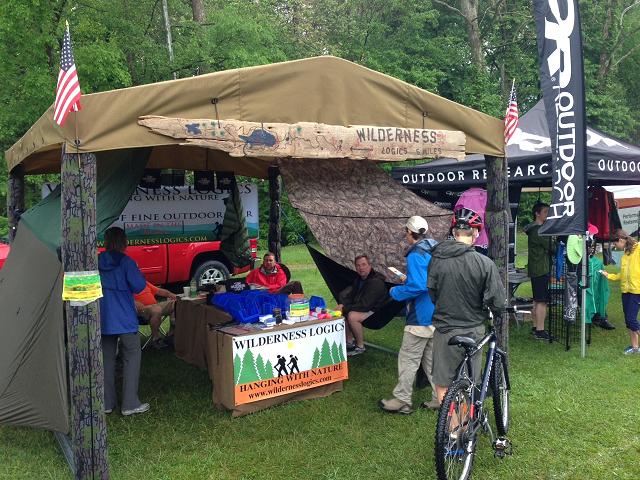
Last week my wife and I made our annual 5-hour pilgrimage to Trail Day in Damascus Virginia.  Reflecting on nearly 10 years worth of experience making this pilgrimage, I always find it funny that one of two weather conditions are guaranteed (1) hot and humid, or (2) rainy and muggy.  This year, prompted by the fact that my wife got a new bike, we brought our bicycles as we had decided we’d deal with the conditions regardless.  We envisioned riding up and down the Virginia Creeper Trail, being able to navigate the town a little easier and otherwise having a far more mobile experience than we did in past years.  Oddly enough, the weather was rainy and relatively comfortable and I quickly learned that as a gearhead I really couldn’t stay away from the vendor tables long enough to deal with my bike which quickly found itself propped up against trashcans and fence posts.


The crowds this year were fewer than I had seen in the past, something I’d call a trend unfortunately.  Virginia-based Mountain Laurel Designs was a no-show which is very unfortunate for one of the very few hiking events let alone right in their backyard.  Ron Bell, owner of MLD, simply said he had too much work and would rather spend time responding more quickly to orders than gaining a few more.  I guess it’s a good problem to have, but I would hope he could have sparred a few hours as his team responded to orders.  I say this reflecting on Ron Moak, owner of Six Moon Designs, who annually makes the drive from Oregon.  I guess he sees the benefit of a few orders and mingling with the hiking community which I respect immensely. 
SMD continues to offer top notch gear and current prices are really enticing.  For anyone looking for a light two-person tent, check out their Lunar Duo which is 30% off this Memorial Day and is a steal at $142 versus $203.  If I didn’t already have one, I’d buy another in a second.  Ron was also driving his new smaller RV/Van in which he built out the interior himself.  I must say, I was jealous and impressed.  Earlier in the morning I got a kick out of listening to Ron talk with Gen Shimizu, owner of Yama Mountain Gear, another Virginia-based company with good stuff, but designs just aren’t that unique or big enough for someone my size for me to really pay them a lot of attention even though I would politely say his stuff is top-notch.  During the conversation Ron was telling Gen how to get out of the sewing business and start mass marketing his stuff.  Gen, whom I’ve met in the past and wanted to sell kits initially and not sew anything, likely wanted nothing more than to figure out how to sustain a business without being involved in the day-to-day sewing operations which I'm guessing is a road Ron has traveled several times.   

Mike St. Pierre from HyperLite Mountain Gear also made the drive from Maine.  For anyone who follows HMG, they pretty much jumped into the lightweight scene without all the drawbacks of a small company trying to market small items and going through the pains of growing the business.  Mike had investors which is a very different business model than other cottage businesses and is extremely evident based on his amount of very solid and widespread marketing.  You’ll see HMG nearly everywhere, and if you miss everywhere, you won’t miss their motorhome.  If my perspective means anything, it is all a bit overwhelming.  I’ve made a handful of purchases from HMG, returned most, and fondled quite a bit of HMG gear.  HMG is nice stuff, but I just can’t figure out where it fits in my gear closet.  ZPacks and Gossamer Gear are lighter; Gossamer Gear, Six Moon Designs and Mountain Laurel desires offer slightly heavier products which are more bulletproof and I find them to be more comfortable to carry.
 
For the first time in many years, Joe Valesko, owner of ZPacks, was at Trail Days with another staff member.  He had a very small booth swallowed up by HMG’s area.  Joe seemed very out of place because his gear is so far on one end of the spectrum that no one else really compares.  I got a kick out of all the novices passing by and trying to have conversations with him.  Overhearing him respond to questions like “what is cuben fiber” from people who looked like they had shares in Patagonia I’m guessing got on his nerves about the 10th time they were asked.  Still, Joe was very personable and he had the posture of “not only do I make my gear, but I live the backpacking lifestyle”.  There was a lot of experience standing under his little tent and I appreciated it.  In talking with him, I could tell Joe is swamped with business and the drive to Virginia was likely a burden to him.  I asked him about a couple custom modifications, and while he said he would do them, he told me that he’s getting very behind continuing to do custom work and would like to focus on both a new tent and new pack design he had been contemplating.  That’s intriguing considering how many times he’s put forth something on the market that no one else had done previously.
I had a good conversation with Judy Gross, owner of Lightheart Gear.  Her business is steadily growing and she opened up another business doing custom sewing, both her passion and her background.  She told me she’d love to unload “the tent business” and focus on sewing custom projects in small volumes.  Course, she’d still want to make her tents.

Each of these lightweight manufacturers are top-notch and I wouldn’t hesitate from buying from any of them.

A new company called Bedrock Sandals is marketing lightweight sandals (essentially glorified flip-flops).  Initially I walked by them as I’ve seen this attempt before, but BS actually took the effort a step further.  First, they initiated their business on Kickstarter, then invested in a 6mm flexible Vibram soles, soles which are much thinner and likely more functional than I’ve seen before.  There is also a lifetime warranty on them from defects and they’ll give you 50% off another order if you wear them out.  The result is a very lightweight and highly functional sandal.  While I don’t bring camp shoes, I have been known to bring water shoes to cross water hazards and truth be told…they could be upgraded.  About the only thing that irritated me was the price - $54.  That just seems too steep for me.  Shipping is an additional $5.25.  So if you’re doing the math, that’s $60 for literally the most thin and featureless sandals you can purchase…and don’t forget $2.95 in taxes bringing your purchase to $61.95!  Course…I do own a lot of titanium and cuben…
The push of hammocking manufacturers over the last 3 years and their increasing footprint was definitely toned down this year which I suspect was singularly because their businesses are becoming far more successful.  Jacks R Better, Hennessey Hammocks and Eagles Nest Outfitters were the only staples as the rest stayed home.  DutchWareGear went from sharing a small tarp area with Ultimate Hammock Book author Derek Hansen to having his own larger area which not only showcased his growing business but also drew attention to his newly designed website.
Some of the outdoor magazines I read offered free samples for a product called Ready Fuel who had a booth at Trail Days.  I received a free sample, but hadn’t used it.  I picked up another sample and ultimately purchased some of the product after talking with the owners.  Essentially Ready Fuel is a gel-like substance originally developed for the U.S. military to use with MRE's.  It is clear they really don’t know what to do with it as they were trying hard to sell the fuel with a haphazardly made aluminum stand singularly made to fit a canteen cup which is largely irrelevant to the backpacker community.  Nonetheless, the product is compelling.  It is lightweight, easy to measure, packs small, burns into nothingness, won’t evaporate-freeze-or-melt, byproducts are carbon dioxide, water and sand, it is non-combustible, non-explosive, travel friendly, water-soluble, burns up to 10,000 feet, smokeless and odorless, and is fairly inexpensive.  Once sample packet can boil 4 cups of water (1 gallon) in 20 minutes.  While the sample packets (which are also sold) must be ripped to open, they do sell a larger volume bladder with a screw-on top which is the version I purchased.  The sample versions are 1.25 oz and burn for a remarkable 20 minutes.  It has a guaranteed 30-year shelf life and as soon as I get a chance you can assume I’ll be testing the product.  For some good deals, go to www.beprepared.com and use code “UTILITY125” to get the product nearly 50% off.  Go to www.readyproject.com and enter the code “readyfuel” for 30% off your purchase.

My wife and I had plans at a resort about 3 hours north to celebrate our anniversary, so we left shortly before 1pm.  While checking my phone a couple hours later, I learned of a tragic accident that happened during the annual Trail Days Hiker Parade where successful past and present Appalachian Trail hikers walk down the main street as crowds clap and throw water balloons or use squirt guns.  It is all meant in good fun and an event everyone looks forward too.  Unfortunately, an elderly hiker who attended the event decided to get behind the wheel of his Cadillac during the parade and suffered a medical event causing him to lose control and plow through the crowds of hikers.  Initial reports were that 50-60 people were injured and up to 6 had to be airlifted out.  Only later was it learned that the driver died and the injuries sustained by hikers were far less in number and severity than initially reported.  Hopefully those who were impacted were able to finish their once-in-a-lifetime journey.  Prayers for all involved.

I must admit, overall I wasfairly disappointed with Trail Days this year, and if I’m being honest, the event has lost a bit of its luster than in years past.  This year was very ho-hum in that I felt like I had seen it all before and more of it.  With the real exception of ZPacks, only because Joe hadn’t been there recently, Ready Fuel, and Bedrock Sandals, there wasn’t a ton of reasons for me to go and I may think twice next year unless the lightweight industry comes up with some new innovation which has otherwise been stagnant for the last several years.

My apologies for lack of quality pictures this year.  My iPhone pretended to take pictures only to learn that there was an issue with the zoom which negated quite a few otherwise good opportunities to better tell the story of Trail Days.

Wednesday, May 15, 2013

$9.92 Wal-Mart Wide-Brimmed Hat

Introduction to lightweight backpacking is often an eye-opening experience. I recall my own transformation which was through reading and study versus mentorship as the “movement” was in its infancy at that time. I remember the feeling that a burden had been lifted and replaced with a hopeful zeal filling my spirit ready to try new techniques and gear.


Nowadays, information on lightweight backpacking can be found fairly easily through books, videos and seemingly endless opportunities on the internet. What I figured out quickly, and succumb to equally quickly, was that pushing the limits of light and ultralight backpacking could quickly get expensive. In fact, I’d argue that many backpackers who go through the transformation from a traditional backpacker to a lightweight backpacker can visibly see their progress based on credit card statements. Prior to or when learning, REI and other brick and mortar stores fill the statement. While and after learning, cottage stores found mostly online fill the statement and spending limits have increased.
It is with this appreciation of my own spending habits that I am particularly excited when I find a functional bargain at a local Walmart.

I had been looking for a wide brimmed summer hat for quite some time. I have a Tilley, and the reality is that it is somewhat heavy and doesn’t breath as well as I’d like. I have an Outdoor Research Gore-Tex broad-brimmed hat, and it breathes so poorly that I barely use it even in winter. Styling of other options wasn’t desirable to me. Otherwise, my hat choices typically fall between a simple nylon baseball cap (which dries quickly, but doesn’t breathe well) and a Headsweats-style baseball cap which has been my go-to for quite a while. Any baseball cap-style hat generally does an adequate job, however in exposed areas, it doesn’t cover the neck area. This means I need to supplement my hat with a bandana or small towel. This is an entirely find solution and a visible reminder of how backpacking gear choices should focus on gear that has more than one function. But still, a wide brimmed and breathable hat is often more practical in some environtments and for some people than a baseball cap with limited coverage.

At my local Walmart, I found a wide-brimmed polyester hat with a mesh top, adjustable chin strap with toggle and neck drape. One element I really liked is the fact that there was a small pocket with a Velcro closure within the brim to fold up the neck drape when it wasn’t desired.  Having worn it for a short time now, I really appreciate how breathable it is too. The cost…$9.92. To my scrutiny, the quality was hardly different than some of the extremely expensive hats on the market (Tilly, Sunday Afternoon, Outdoor Research, REI, etc.). While I may or may not wear it on every outing as I’ll be the first to admit that sombrero-hats have the potential to look silly, the price and design is such that I’m honestly pretty excited to own it.

I looked on Walmart’s website for a link for the purposes of this blog and couldn’t find one. So the best I can do is to provide readers with information from the tag and photos. There are three tags on the hat. The first says “Tuck-Away Neck Drape”. The second says “Protect Your Skin. Wear Your Hat.” The third, the actual Walmart tag, reads, “Paddler With Vent”, “UM13202”, with a UPC of (8)874393164(1).