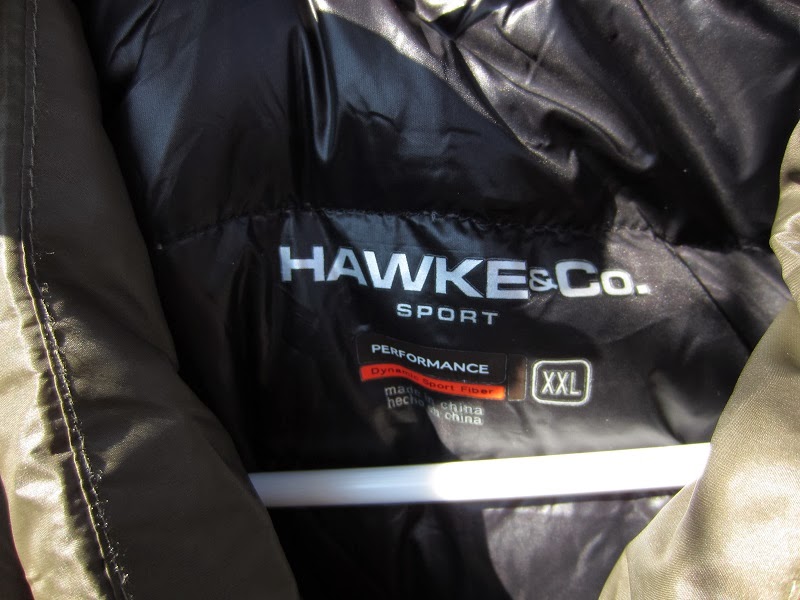
Bottom line, if you’re looking for a good-enough inexpensive
lightweight down vest, take a look at eBAY for Hawke and Co., search by price,
and you can take home a purchase that may also work for your needs.
Monday, March 10, 2014
Inexpensive Lightweight Down Vest
Saturday, December 28, 2013
Gossamer Gear Q-Twinn Tarp and Ultralight Storage Bag
Gossamer Gear was one of the
first cottage manufacturers to bring lightweight backpacking gear to the
masses. At the time, they embraced
silnylon and spinnaker fabric. In the
following years, while quantities often ran small, what stayed consistent were thoughtful
and functional designs and well made products.
The Q-Twinn Tarp
(7oz / $315) is an ultralight catenary cut tarp made for two people. Seams and tieouts are fully bonded, meaning
there isn’t a single stitch so you can avoid seam sealing. The color is a translucent black. At 7oz, you’ll be hard-pressed to find a
lighter and more sizeable alternative.
The Ultralight
Storage Q-Series ditty bags (2-6g/$15-$16) are two products that I think the
industry has been missing. Both are made from cuben fiber. One is a zippered
ditty bag (6.5” x 5”) which comes with a small loop of lashing which means
it can be fastened to the outside of a pack, branch, shower head, or ridgeline
without a fuss. This is great for anyone who doesn't want to deal with a draw string and wants a shallower and wider option to more easily see the contents of the bag. The second is a 10” x 3.3” stake bag. Having a place to store dirty shelter stakes without using a plastic bag or other option which does nothing but puncture or spread soil around is a great help. At 2-6 grams, they are unnoticeable, and at $15-$16, they are quite affordable.
Happy trails.
Wednesday, December 11, 2013
Gossamer Gear Air Beam Sleeper
Several years passed since then and I’m pleased to announce that
Gossamer Gear has partnered with Klymit to offer the Gossamer Gear
Air Beam Sleeper. Like the prototype
I miss so dearly, the Gossamer Gear
Air Beam Sleeper also tapers both vertically and in width and length. It comes in 4 sizes and ranges from 7.2oz to
13.80oz. Pricing is $82 to $99.
·
XLARGE - 28" Wide tapering to 19" X
56" Long X 2.5" tapering to 1.5" in height
·
LARGE - 21" Wide tapering to 14.5" X
56" Long X 2.5" tapering to 1.5" in height
·
MEDIUM - 21" Wide tapering to 14.5" X
48" Long X 2.5" tapering to 1.5" in height
·
SMALL - 21" Wide tapering to 14.5" X
36" Long X 2.5" tapering to 1.5" in
height
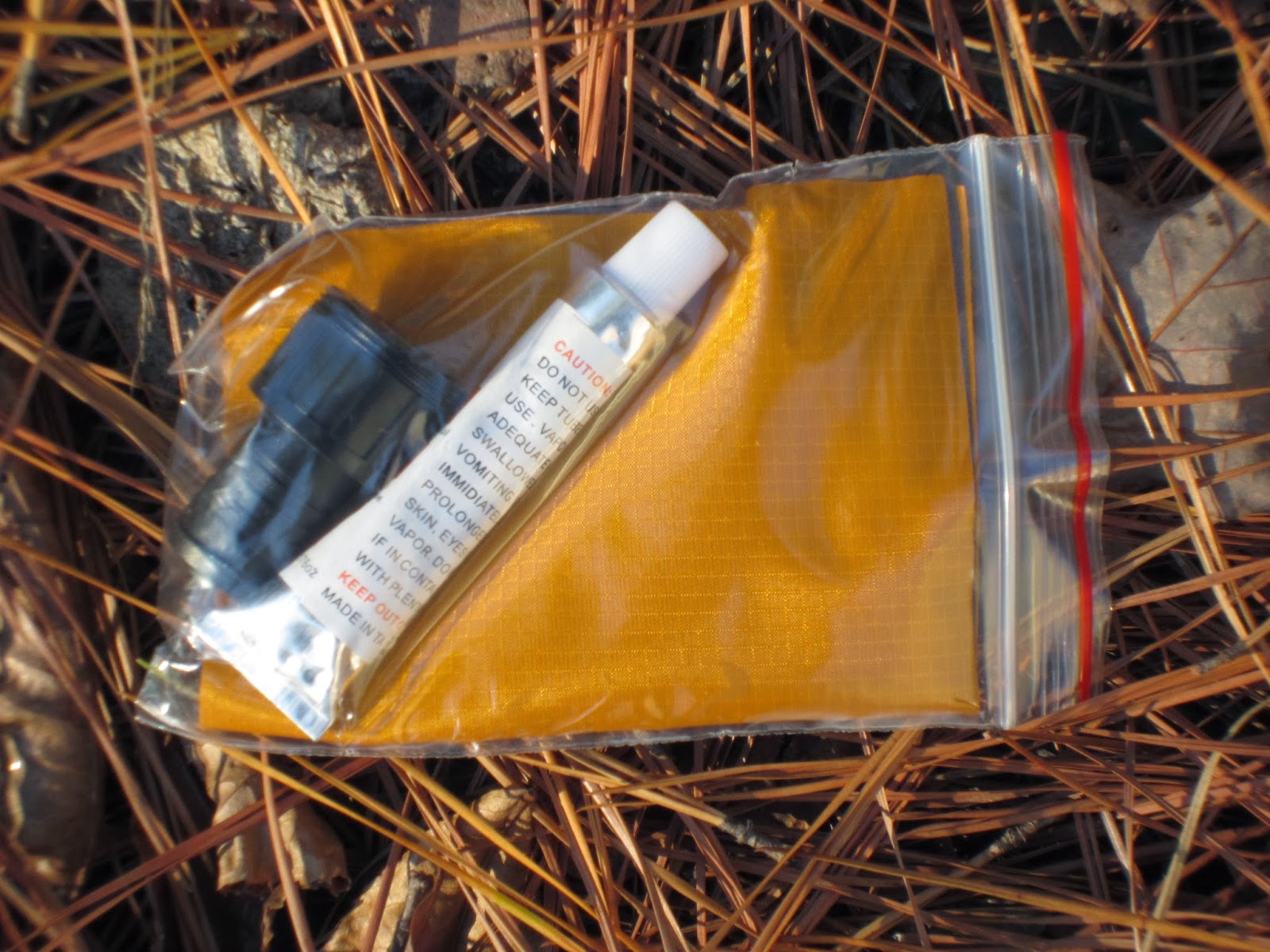
Gossamer Gear includes a patch kit and extra valve with purchase.
I like the Gossamer Gear Air Beam Sleeper quite a bit, but there are some drawbacks. First, I’m not aware of a creative solution to blow it up without using my mouth which means it gains condensation fairly quickly. Second, while it is refreshing that different sizes are offered, I’d like to see one that was considerably wider. At 6’5” and 280 pounds, I wear a 54 wide jacket which means I’m very broad shouldered. I figured the 28” wide XLARGE would suit me just fine, but it isn’t quite big enough as the pad loses measurable width when inflated.
Regardless, Gossamer Gear has introduced another great product and I
truly hope it evolves into a padded and wider product that will stay on the
market.
Wednesday, December 4, 2013
BIO EARTH RUNNERS SANDAL
Michael Dally with Earth Runners
was kind enough to send me sample of their new Bio
Earth Runners Sandal which is currently associated with a Kickstarter campaign. If you choose to contribute, sandals start at
$60 (or 20% off). Orders will be taken
throughout December and dispatched in January.
After January, they will be available on the Earth Runner website (www.earthrunners.com).
The footwear industry over the last several years has been pressing
consumers to try footwear with less padding ultimately mimicking a barefoot
walking style. There are many clever
names for this movement, but the concept remains the same. The spirit of this movement is the belief
that by walking closer to the ground and having less robust footwear, the foot
is strengthened and walking consciousness and body mechanics are improved.
What put Earth Runners on the
map is that they uniquely focused their initial product offerings on being
connected to the Earth’s electrical potential by strategically placing copper
insets throughout a self-molding conductive sandal sole. The copper insets curve at the toe base in
the shape of the geometric concept called “Golden Mean”. This shape, coupled with the copper insets,
allowed for pressure to be placed on areas of the foot sole believed to offer
self-healing effects similar to those achieved by acupuncture. While wearing a pair of Earth Runners associated with this
technology, Voltmeter tests confirmed the charge of the human body is
negligible while wearing grounded footwear on the Earth’s naturally conductive
surface – the same electrical potential as the Earth.
The Bio
Earth Runners Sandal is the next iteration of minimalist footwear inspired
by long distance runner. With a custom
molded sole and “zero drop” from heel to toe, the experience is similar to
going barefoot while maintaining safety in varied terrains. The foundation provided is stable. Copper impregnated conductive laces attach to
a copper plug on the bottom of the sandal allowing similar attributes to the conductive
sandal soles as described above. The
Tactile Mitosis tread is made of moldable EVA (6mm) and the BioTac bedding is
made of recycled car tires.
One of the unique features of the Bio
Earth Runners Sandal is the lacing system.
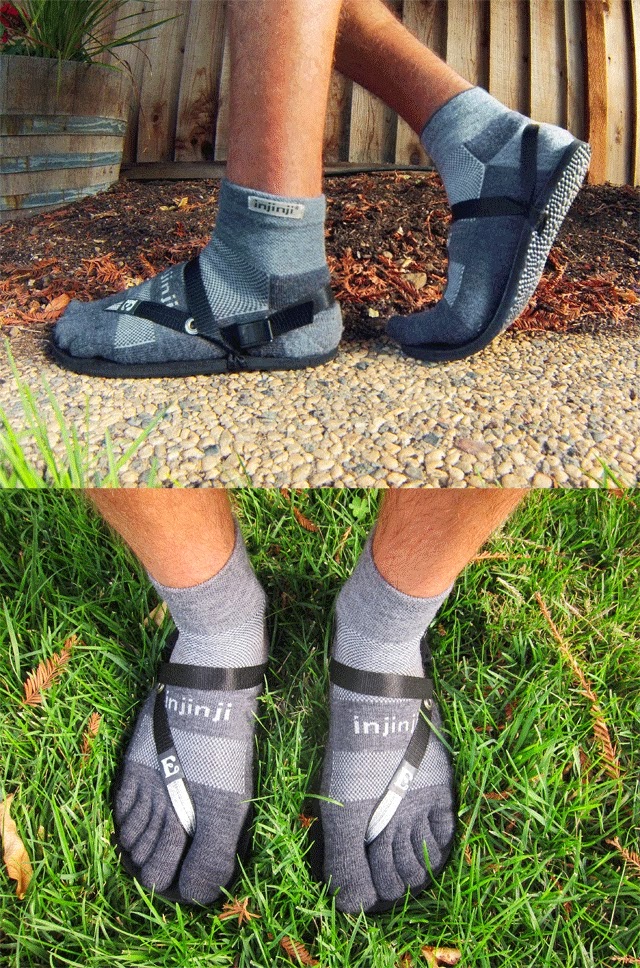
Nylon webbing is routed through the sandal bed, around the big toe and
ankle and is ultimately secured with a locking buckle. It is entirely adjustable, although it is
likely they will fit just fine out of the box.
While not necessary, Earth Runners offer Injinji
socks whether to improve comfort or to keep feet warmer during cooler
temperatures.
In the last two years, I’ve been asked to review three
different sandals which were very similar to the Bio
Earth Runners Sandal. After
receiving and fiddling with each, I decided to return them as I didn’t feel my
finicky feet justified an extended trial and quite honestly – I didn’t find
them comfortable. Largely, I have fairly
wimpy feet and prefer more coverage and greater padding in most
circumstances. I was pleasantly
surprised when I tried the Bio
Earth Runners Sandal.
As advertised, the Bio
Earth Runners Sandal both immediately contoured to my foot and I didn’t
need to adjust anything. I elected to
use Injinji socks initially due to my lack of foot machismo,
but found them comfortable with or without.
They were quite stable in all environments and the traction, something
that lacked in every other sandal I’ve tried, was significant. I found myself thinking about other things rather
than worrying about whether my foot was comfortable or if I’d slip. Essentially, my experience was walking as if
I was barefoot without the fuss of being concerned about stepping on something
undesirable or the sandal slipping out from under me. I hope this is interpreted as a high
complement to be able to rely on a piece of gear without giving thought to its
failure.
This was also my first use of Injinji socks which I
assumed wouldn’t be comfortable because I figured my toe shape wouldn’t be
conducive to the unique “finger” design.
I was equally surprised that they proved to be out-of-sight and
out-of-mind once properly snugged over each toe. Pairing them with a sandal is very
appropriate in my opinion, although vocal fashionistas may disagree.
In the lightweight backpacking world, I can perceive
quite a few applications for the Bio
Earth Runners Sandal. First, there
are plenty who would enjoy the simplicity and near weightlessness. Others would take pride in being able to walk
through varied terrain, including forging waterways, without stopping to
swap-out or dry-out footwear. Some would
likely enjoy the fact that their feet wouldn’t be as susceptible to sweating
and resulting blisters or the dinginess that sticks with more conventional footwear. Finally, others would likely enjoy simple and
lightweight footwear to do double-duty as camp-footwear or for water
crossings. Bottom line – this is a
useful product for lightweight backpackers and my only suggestion for
improvement is for a slightly longer webbing tag to allow for finite
adjustments as desired.
By supporting the Kickstarter
campaign, materials and manufacturing costs are kept to a minimum. You also help towards the down-payment of a
new manufacturing facility and legal expenses to get this endeavor off the
ground. Earth Runners offers a 30-day
money-back guarantee – so what’s not to like?
(Disclosure:
This product was provided to me free-of-charge for the purposes of this review
and is owned by me. However, any information contained herein is my
personal opinion without bias.)
Sunday, November 24, 2013
MLD / Klymit Pillow X (1.9oz/$30)
The only
drawback, MLD doesn’t offer a patch kit, although truthfully, it probably isn’t
needed and most backpackers likely already carry one for their sleeping pad.
Wednesday, October 23, 2013
Sawyer Mini Water Filtration System
The folks over at Sawyer
were kind enough to let me test drive their new Sawyer
Mini Water Filtration System ($18-$25/2oz).
The “mini” was a bit of a surprise to me because Sawyer seemed to
already be leading the industry with the Sawyer Squeeze Filter which received
quite a bit of press in the last year.
The beauty of both systems is that they are reliable, effective, and
flexible enough to offer a variety of configuration preferences (i.e. squeeze,
inline, straw). Both also come with a
straw as well as squeeze bottles. The squeeze
bottles have been improved from the first release of the Sawyer Squeeze and
both filters continue to fit Evernew
bottles and likely other options.
While I was already a user of the Sawyer Squeeze Filter, the beauty of
the Sawyer
Mini Water Filtration System is that it is physically smaller, lighter and
less expensive – but the effectiveness remains the same. At 2oz and roughly $20 for a .01 micron
absolute filter capable of removing 99.99% of bacteria, protozoa and cysts for
up to 100,000 gallons – this is a product that comes with its own cheering
section.

The filter is essentially a cluster of micro-fibrous tubes. Water is drawn through the side walls of the
tubes into their hollow center and out of the end of the tubes. Harmful bacteria and protozoa is trapped on
the outer walls of the tubes delivering fresh and clean drinking water.
Lightweight backpackers, almost by necessity, are fairly meticulous
about the gear they carry. Making
decisions based singularly on grams and ounces can quickly yield to a declining
fun-factor. As a result, there is a
middle ground between weight and overall comfort. In my quest for lightweight water treatment,
my personal backing history has run the gamut from pumps to chemical treatments. Looking back, using a pump nowadays is like
continuing to carry an Army cot and gas lantern. They are bulky, expensive, and prone to
failure. Anyone who has had their hand
slip off the pumping feature will quickly
look for an alternative solution once their hand recovers from being pinched
(or worse) and dealing with a clog is an unfriendly nightmare. UV options are pricey, prone to easy damage and depending on the model, batteries may be hard to locate. UV options are also only effective in water that is already clear and only for a set volume. A pre-filter is a good idea, but adds another step and element. Lastly, UV options may kill water nasties, but it doesn't remove them. Personally, the knowledge of chugging "dead" nasties doesn't make me overly thrilled. More often than not I've relied on chemical tablets. Tablets are
effective and lightweight, but gram for gram they are fairly expensive and do nothing
to filter out floaties and other nasties. Usually I use a biodiesel bag or tulle as a prefilter. Personally, I’m not thrilled about
putting chemicals into my body or their cumulative effect.
Fortunately with the Sawyer
Mini Water Filtration System, weight, cost, nor effectiveness are reasons
to leave it at home. It is lightweight,
affordable and effective. I’ve used it
repeatedly for the last three weeks in several different environments,
temperatures and in conditions of varied turbidity. Out of the box, my first use was dipping the
bottle into a stream. I turned the
bottle over and expected it to take quite a while to prime the filter. To my surprise, clean water flowed out almost
immediately. A second misconception was
put to rest when I noted that I didn’t need to squeeze or suck on the nozzle to
get a sufficient water flow. Basically,
it worked like a charm without additional effort.
Aside from the fact that is an inexpensive, effective and less bulky
option than other physical filters, I like the fact that the drinking nozzle
has an effective cap cover. While this
comes into play to keep grit out of the drinking end, I quickly learned that it
avoided cross contamination when the bottle and filter fell off a rock into a
stream while I was photographing it for this article. Verifying that the filter wasn’t compromised
because of my own carelessness was a nice unexpected benefit. Having reviewed other water filters on this
blog, the protective cap on the Sawyer
Mini Water Filtration System is a rarity on other filter options as either
they are missing entirely or are manufactured without expectation for them to
last more than a few uses.
Mini Bull Designs also offers a unique adapter
for $10 as well as a screw
top for the Sawyer Squeeze for $15 which I prefer and own.
I enjoyed the flexibility of using it as a gravity filter or with a
straw, but most commonly I simply drank straight from the bottle.
Aside from a smaller, lighter and equally functional back-flush option
as described above, I would personally like to see see-through bags and bags
with a means to hang them upside down (i.e. hung from a tree) or stand-up on
their own.
For general information about water nasties, below is part of an
article I previously authored which helps illustrate why a .01 micron absolute filter is critical.
PROTOZOAN CYSTS – These are hard
shelled, single-cell parasites which include Giardia and Lamblia and range in
size from 5 to 15 microns. This also includes Cryptosporidium Parvum which is 2
to 5 microns in size. Giardia occurs in the small intestine where cysts hatch
and give you diarrhea, gas, nausea, and/or cramps and symptoms appear within 1
to 2 weeks and can last 4-6 weeks or longer. Those with weakened immune systems
could be more heavily impacted. Cryptosporidium can give you similar symptoms
and can also include loose stool, cramps, slight fever, and an upset stomach.
These systems generally appear in 2 to 10 days and typically last 2 weeks.
Animals and humans carry Protozoa.
BACTERIA – Bacteria are smaller organisms which can include E. Coli, Salmonella, Cholera, and Campylobacter Jejuni. They range from .2 to 10 microns and symptoms include diarrhea with appears within 6 hours or 3 to 5 days and last 4 days or longer. Animals and humans carry Bacteria.
VIRUSES – Viruses represent the tiniest of organisms ranging from .004 to .1 microns. They include Hepatitis A, Rotavirus, Norwalk Virus, and even Polio. Although these are the least commonly found pathogens in the wilderness water sources, they represent often the most harmful. If you were wondering, most waterborne viruses which affect humans in the backcountry come from human fecal matter.
CHEMICALS AND RUNOFF – As the name implies, another water-nasty includes agricultural runoff (herbicides, pesticides, etc.) and industrial runoff (metals, mine tailings, etc.).
BACTERIA – Bacteria are smaller organisms which can include E. Coli, Salmonella, Cholera, and Campylobacter Jejuni. They range from .2 to 10 microns and symptoms include diarrhea with appears within 6 hours or 3 to 5 days and last 4 days or longer. Animals and humans carry Bacteria.
VIRUSES – Viruses represent the tiniest of organisms ranging from .004 to .1 microns. They include Hepatitis A, Rotavirus, Norwalk Virus, and even Polio. Although these are the least commonly found pathogens in the wilderness water sources, they represent often the most harmful. If you were wondering, most waterborne viruses which affect humans in the backcountry come from human fecal matter.
CHEMICALS AND RUNOFF – As the name implies, another water-nasty includes agricultural runoff (herbicides, pesticides, etc.) and industrial runoff (metals, mine tailings, etc.).
(Disclosure: This product was provided to me free-of-charge for the purposes of this review and is owned by me. However, any information contained herein is my personal opinion without bias.)
Tuesday, October 1, 2013
Gossamer Gear Warm Sack

At the recent Jolly Green Giant
National Lightweight Backpacking Symposium and Convention, participants
reviewed the Gossamer
Gear Warm Sack ($14.95/(17g). All
participants, to include me, myself, and I, unanimously agreed by verbal attestation
and hand-raised oath, that the Gossamer Gear Warm
Sack was deserving of the highly prized Saved
A Few Grams Award.
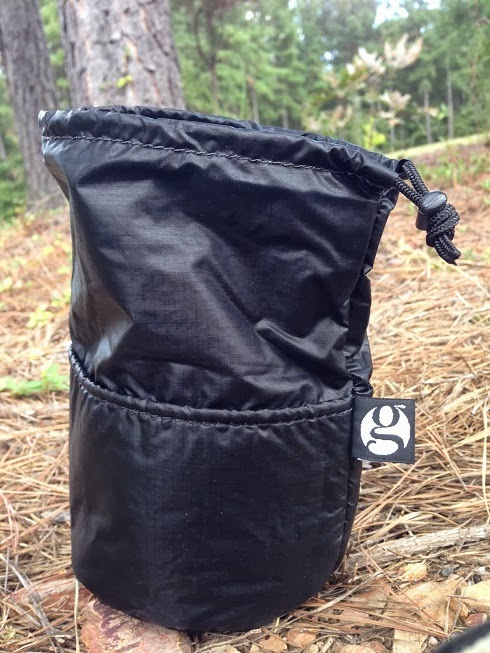
The Gossamer
Gear Warm Sack is intended to replace heavier “cozy-style” pot/cup warmers
while offering a more flexible and dual-purpose option being that it doubles as a
bag. The bag, in unassuming yet enticing
black, works well to store cooking items and makes a wonderful CIA-style
interrogation head bag when the neighbor’s cat is the only source of
entertainment for a long evening and you have a lot of questions on your mind. The bag has insulation sewn on the inside to ensure your warm slop stays toasty.
The Gossamer
Gear Warm Sack is ideal for gram weenies and fashionistas alike, but note
that it only fits mugs/cups likely 700ml and below with greater comfort between
400-600ml. I tried it with several
options:

·
THUMBS
DOWN
o
Snow Peak 900
o
Evernew 700
·
THUMBS
UP:
o
MLD 450ml cup
o
LiteTrail Toak 500ml cup
o
Stoic 700ml cup
For me, the Gossamer
Gear Warm Sack will replace the absurdly heavy homemade Reflectix option
seen here tipping the scales at a gluttonous 24 grams. The svelte Gossamer Gear Warm
Sack comes in at a dainty 17 grams saving me an enormous 7 grams . This savings offers me the opportunity to carry a couple discarded black jelly beans, perhaps that fancy half toothbrush I had my eye on, or a rubberband so I can say I carried a rubberband.
Vigorous testing proved the Gossamer Gear Warm Sack worked just as well as Reflectix, or more accurately, proved to fall into the "good enough" category.
Happy trails.
(Disclaimer: No cats were harmed
during the testing of the Gossamer Gear Warm
Sack. The Gossamer Gear Warm Sack is not recommended to be used beyond the limits
for which it was intended.)Saturday, September 7, 2013
Luke's Ultralight Gore-Tex Limited Edition Shell
When I was growing up, I was always at the front or back of the line in
school when headed out for recess. When
picking sports teams, especially basketball, I was always picked first. When someone needed help moving, I was always
reluctantly volunteered. When it came to
family photos, I was always in the middle/back.
When ordering airline seats, I always look for an emergency exit or front
row. When renting cars, “compact” has
never been an option. When shopping for
clothes, anything trendy was meant for the rest of the world. My mother in-law constantly asks me to dust
on top of her refrigerator. People often
feel uncomfortable when I stand too close to them in elevators, buses or trains. Ceiling fan stores make me feel uneasy.
Being a big person in a medium-world is a bit of a challenge. Manufacturers of, well, most anything plan
their products by the rule of averages to appeal to the masses. For that reason, most of life doesn’t quite
fit me. Backpacking is no different. Most everything I own for backpacking is
either custom-made or fits to the degree of “barely” or “uncomfortably”.
I’ve been looking for a lightweight rain jacket for, I kid you not,
about 8 years. I feel like I’ve tried
just about everything and spent a bundle on expensive fabric and imports from
all around the world. I have a closet
full of stuff that has been relegated to “around town” apparel and a bank
account drained from return shipping costs.
It is with this in mind that I make the following statement: Luke, of Lukesultralite,
is my hero.
I heard of Lukesultralight a few months ago from some forum
chatter. As more companies move towards
gear for lightweight backpacking, I’ve recently noticed quite a few more small
cottage manufacturers popping up than in past years. The problem is that not all are quality. I made the mistake of ordering essentially
garage junk many times over the last 10 years from well-intended cottage
manufacturers and my maturing attitude (and stuffed gear closet) has only
recently caused me to be a little more careful with my purchases. I’m pleased to say quite clear that
Lukesultralight is a quality shop.

Luke made me a custom Gore-Tex
Limited Edition shell from Pac-Lite.
On his website, this shell is listed at $99. Read that again - $99 for Pac-Lite. The fee to customize it to big-boy size was
quite reasonable.
I already own shells constructed of multi-layered Pac-Lite, eVent,
various silicon-impregnated nylons, micro porous Dri-Duck materials, DWR coated
options, and just about every house-brand proprietary waterproof fabric you can
think of to include WPB Cuben fiber made by Zpacks. Without offending anyone, none of these were
significantly any better than others.
Sure some were cheaper, some were more durable, some were lighter, some
packed smaller, some were sized better, etc., but all merely made me hot and
sweaty, most were clingy and uncomfortable to wear, and most were far more
expensive than I liked.
What Luke is selling is an ultra-simple hooded lightweight Pac-lite
fabric with waterproof zippers, elasticized cuffs, and adjustable waist cinch
and optional pit-zips. Seam taping is an
extra $15. It also comes with a nice
stuff sack made of the same material. In
medium without frills, the jacket comes in at 7.2 oz. mine was a shade over 10 which is entirely
fine by me as my Dri-Ducks is over 8, fits poorly and has nearly zero
durability.
I ordered my shell via e-mail with direct conversations with Luke. I knew exactly what I wanted, to include
dimensions, as I’ve played this game before.
I knew what I needed even though typically what I requested from other
custom manufacturers wasn’t always what I received. Luke was quick to respond, clear in his
communications, excessively polite, easy to work with and left me with the
impression of – this guy gets it.
Most custom gear I order generally takes 6 weeks or more. In fact, I’d argue that 6 weeks is probably
on the early side as I’ve waited up to 4 months for other gear before and most
things are somewhere in the middle. Luke
wrote me an e-mail within a little over a week to say that the jacket was ready
to ship. A few hours later, I got
another e-mail apologizing saying that he didn’t feel the jacket he made
entirely met my specs after measuring it and didn’t feel comfortable sending me
a product that wasn’t exactly what I wanted.
After a little more than a week, I received another notice of shipping
and a few days later the package arrived.
Luke even mentioned he was going to send me a free cuben stuff stack for
my inconvenience, even though I felt no inconvenience and was merely happy that
he cared enough about his product to ensure that I was completely happy.
In the package was an excessively neat and small pouch with my jacket
inside. As an experienced backpacker
familiar with how small all of my clothing packs, this jacket easily packed
smaller than any other shell I had. It
was also very light in my hand. I
immediately felt like my purchase was going to be worthwhile when I noticed how
well the stuff sack was made and it even included a little mitten hook at the
end of the cinch which is a nice touch and helps it become a multi-use
item. Stitching was clean and there was
even a little eyelet for the stuff sack cord to ensure the fabric wasn’t
damaged while adjusting which is a step 99.9% of other cottage manufacturers
don’t take.
This shell was already just fine in design as-is and needed only
tweaking for big-boy size and a drop tail which I desired. It layers excessively well with cold weather
gear or hangs loosely in the warmer months which is entirely what I wanted. For options, I elected for armpit zippers and
taped seams. Naturally, as my trail name
sake suggests, I went with moss green. After
putting it on, despite it being fairly warm, I immediately felt like it was
breathing. After ensuring the armpit
cuffs, waist cinch and wrist cinches were open along with the collar, it felt
just fine to me and better than most every other option in my gear closet.
I honestly can’t say enough nice things about this product or the
service from Luke. Hands-down, this is
my favorite purchase for 2013 and my favorite apparel item. It’s outstanding to finally have exactly what
I wanted and even at a fair price. Kudos
to Lukesultralight.com. Highly recommended.
Subscribe to:
Posts (Atom)